Notes DB 93 Theological Genocide - 2026
Sunday 1 February 2026 - Saturday 7 February 2026
[page 272]
Sunday 1 February 2026
An old question. Does space make particles (the spin statistics theorem) or do particles make space (like the Khinchin permutation of fermion and boson mechanism)? Once again we will fall back on the simplicity of the primordial steps in creation, rejecting the idea that the space and fields of QFT are given primordially (by the creator?)
The question where does entropy come from? [the symmetry at the foundation of probability theory (Kolmogorov)] Theology answers with Augustine’s Trinity. We exploit this idea with the fixed point consequences of the singularity mapping onto itself (Brouwer) to create orthogonal bases for Hilbert space, running from 2 to ℵ0.
So clarity comes slowly and it is very slippery, so here’s a grab:
1. The problems with quantum field theory
2. The universe is a source of communication, ie entropy
3. Quantum symmetry and inertial space
4. Bosons and fermions → the Minkowski metric
5. The Aquinas–Einstein symmetry is the beginning
6. *Theology meets physics.Hope rises with faith in reality.
*[insert] Physics and theology is psychosomatic so we can say that a good theology heals body and mind. All our technological knowledge is a fraction of the total body of information collected for us and distributed in the core cohort of ten million or so scientists who are pursuing complex instrumental (laboratory) studies of the physical universe at all scales from galaxies and continental drift to logical quanta embodied in elementary particles.
[page 274]
Can we guess that potential energy, like bosons, is masssless. If we set the mass of a pendulum at zero in the [vertical] centre of its swing then at the top of its swing its energy is −η and at the bottom it is +η establishing that potential (top) + kinetic (bottom) = 0.
Monday 2 February 2026
L4L_e03_physical_theology new part 4, Entropy, Hilbert space, Augustine, Trinity, Brouwer fixed point, title? Initial singularity creates Hilbert space through mapping fixed points onto itself. Here we turn to theology for inspiration, the Trinity.
So where is this article going? Looking for an application of the heuristic of simplicity in the creation of the universe. We are good up to §3. §4 listed above is well on the way only needing a few paragraphs on the randomness of the structureless initial singularity [see p 277]. 5 is good as are 6 and 7. So its really just a matter of assembling the remaining bits and pieces. The real progress lies in the explanation of Minkowski space as a quantum mechanical creation involving a symmetry and structure induced by the twin bifurcations of energy and fermions and bosons, getting us [4 bits of data] as far as 4 space in which our observations take place. The final section should mention Zurek and the conversational nature of quantum mechancs [beginning with the two words fermion and boson].
Also the market is crashing a bit, down 3% today. <.p>
The feeling we like most is feeling, the awareness of being that may
[page 275]
fall on the spectrum from pleasure to pain [the prerequisites for writing music?]. Ben Brantley (2016_09_18): Edward Albee: A Playwright Who Saw the Minotaur Inside All of Us
alternative – energy not from fluctuation but from gravity bifurcation.
Insofar as action is the unit, time is the measure of energy as illustrated by the photon. Action, angular momentum, spin.
Tuesday 3 February 2026
Let us say that we have 61 hermitian operators one for each of the elementary particles.
Another way of looking at it all is to condense the Everett picture from many worlds to one changing world by applying he gravitational bifurcation to the Everett wave function as a whole to bring it down to Earth. Hugh Everett III (1973): The Many Worlds Interpretation of Quantum Mechanics
. . .
What is the quantum mechanical explanation of mmetum, the theory of the hammer and ball games?
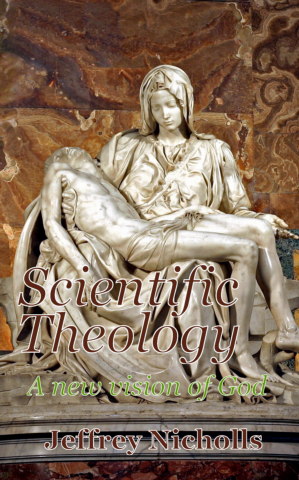
This is a book for the ages; since Galileo defeated the Roman Catholic Church with a simple primitive telescope theology is beginning to struggle out of the mythical dark ages into the light of science. Read my book thank the real god.
[page 276]
Maybe the fundamental particles are represented by a set of projection operators, ie operators which make no change if repeated.
Also the conclusion to physical theology may be based in some way on the many worlds interpretation which is in effect the exactly opposite of a projection operator: a repeated operation creates a new universe.
The only distinguishing characteristics of different sets of mutually orthogonal basis states is their number. All spaces with the same number of dimensions are identical. Is this true? It must be. The only characteristic like the faces of a coin or die is mutual orthogonality, there are no identities and no distances.
Half of me thinks I am old and I have done enough and the other hand thinks I should get on with it. The real retardant, I think, is that ideas come slowly and depend on uncontrolled behaviour. My best idea today which has probably been staring me in the face forever, is the statement of the entropy of a Hilbert space stated in the previous paragraph and we have to show that the increase n entropy [which is a real time thing] is closely linked to increase in structure and increase in structure is closely linked to stability. From this I feel that the set of elementary particles needs a quantum mechanical explanation and arises in some sense because the particles form a self sustaining group. How this actually works is beyond my power but the entropic / stability arguments give us the first clue.
[page 277]
QFT simply solves these problems by fiat, defining fields and spaces as a given foundation and more or less deciding, through the big bang that an enormous explosion at infinite temperature will gradually settle down to the universe we have. How, however, can we have an infinite temperature without a lot of pre-existing particles? The critique of QFT in §1 of L4L_eo3_physical_theology has to make that point which is a conseuence or ‘prediction’ of the heuristic of simplicity.
This story also gives us a pretext for defining the initial Hilbert space as a qubit representing a boson and a fermion, which are intrinsically related to the bifurcation of the singularity into kinetic and potential energy, ie mass and force, the foundations of classical mechanics which have a role near the beginning through the heuristic of simplicity. I suppose I like to think that the last three pages of writing are a day’s work, and now I can spend the evening threading these ideas into my l4l essay (although reading back it never seems as good as the first time).
. . .
We imagine a classical gravitational harmonic oscillator in a pendulum, but how can we imagine a quantum harmonic oscillator? Doesit make any sense? The zero point energy is an error that arises by imagining quantum mechanics in Minkowski space and leads to the cosmological constant problem which is rubbish - see eg Wilczek. Frank Wilczek (2008);: The Lightness of Being: Mass, Ether, and the Unification of Forces page 109.
There cannot be a quantum harmonic oscillator because there is no time [or energy] in quantum mechanics. Even von Neumann was deceived by this. The analogue of time in quantum mechanics is the random arrival and disappearance of basis states in the singularity and the beginning of structure in the formation of fermion–boson pairs, kinetic and potential energy adding up to zero which maintain one another in existence as a discrete U(1) group, ie two complimentary hermitian operators superposed on one another. In this way we eliminate all continuity in the formation of structure by we maintain the Gaussian / Riemannian continuity that Einstein used to make his theory of gravitation using the Minkowski space created by real discrete fermions and bosons. In this way we get rid of the cosmological constant problem and support the role of the divine Aristotle Augustine Aquinas Einstein creative quartet with maintains 4D Minkowski space. All a dream which arose by deleting zero point energy and the cosmological constant problem wiping out Wilczek in the process and giving quantum mechanics the starring role with gravitation in the creation of the universe without field, renormalization and with confinement and asymptotic freedom maintained by pure quantum stability and gravitational donation of energy [ie repeated sequences of action]. If this is all true I will believe in god and marry SC and take her to my Nobel prize ceremony. Entitlement rules [I learn from Trump and sound like him].
[page 279]
We model the gnostic gap between matter and spirit with the difference between real and complex numbers which we imagine to make the difference beteen dynamic and kinematic. There is an analogy of time in the rotation of a vector in the complex plane, but it is not time, it is a sequence of roots of unity which begins at two roots and continues all the way to ℵ0. This kinematic process makes sense of superposition and can be modelled by perfect gases like air and to s lesser extent water so we can see superpositions of different roots of one quite perfectly in air and see them roughly modelled on the surface of smooth water. The key to this is the distinction between kinematic puppets and dynamic realities and we have an analogue in the motion picture industry of the conversion of a kinematic representation on a lit screen to the reality of that passion in the hearts of the watchers as we feel the emotions represented on the screen in words and music in their own bodies, as, for instance, in the film Hamnet.
Wednesday 4 February 2026
Is all this working out to well, but it is to be expected. We expect an infinitely complex beginning to a universe created by an omniscient omnipotent creator but in this story we are constrained by the heuristic of simplicity and so we expect the entropy to increase 1, 2, 4 . . . and if we take logarithms to base 2, 1, 2, 3. As Feynman points out (?), the periodic table is a new way of counting 1, 2, 3, H, He, Li.
What we are looking for is a universe in which childish pleasure is normal. [All the entities in the universe are effectively children, especially entitled ones that never grew out of their nappies.]
[page 280]
We are trying to capture the full dynamic capability of Hilbert space. In other words we are going for the transfinite intellectual space I first explored in my 1987 lectures, A Theory of Peace. I have come a long way since then, 13 + 25 = 38 years and my world is still growing but at least I have a beginning in the Aquinas–Einstein initial singularity / symmetry which chooses the bast points of Aquinas and Einstein. The singularity is real, a substance, identical to the divinity, omnipotent without any structure. We say this again and again. Now we are studying Augustine’s theory of the Trinity with the aim of creating an abstract Hilbert space in this singularity and this brings us to the old question about the relationship between mathematics and reality. Jeffrey Nicholls (1987): A theory of Peace
The best place to start is with Plato and Aristotle, we might call them the boson and fermion of ancient philosophy / theology. Plato is the boson, massless, imaginative, communicative, perhaps even spiritual. Spirit is embedded in substance, ie information is physical, as the Bible teaches us by its existence, even when it is an oral mental document, imprinted in neurons.
We are building the world in layers: abstract /concrete, each abstract exists in the previous concrete and we start the chain with the Aquinas–Einstein singularity which is concrete. It gets an abstract complex Hilbert space (we might say “it thinks it up”). Stationary forms are then chosen by hermitian operators. These forms are made concrete by the bifurcation of the zero energy symmetry into kinetic and potential energy making up the first round of concrete fermions and bosons which generate the abstract metric of Minkowski space which introduces the mass shell which is abstract, controlling the formalism of more concrete particles, say electrons and photons. [see Lust-4-Life/Essays? Forthcoming?]
Physical Theology: a historical derivation
[page 281]
The layered structure respects conservation of energy and enables boot-strapping. This goes into the abstract which finishes with the need to replace QFT which becomes §1.
A picture is emerging from the fog, the complex system out of which comes a real theory,
To the physics department: theologians have been creating theories of everything since time immemorial. I began studying theology as a Catholic monk and saw quite early that the time had come for scientific theology. This brought me into conflict with the Church which considers itself infallible and maintains a tight grip on the orthodoxy of their theology through the 2022 Dicastery for the Doctrine of the Faith (successor to the 1542 Supreme Sacred Congregation of the Roman and Universal Inquisition which became the Supreme Sacred Congregation of the Holy Office, and then in 1965 the Congregation for the Doctrine of the Faith). I was expelled from the order and my solemn vows dissolved by the Vatican.
In the following 60 years I continued to develop my dream and concluded that from the point of view of developing a theory of everything quantum field theory is also a dead end. I include in this the proposal prepared by the Clay Mathematical Institute. I well not win the prize but I am happy to reject what I see as a false Ansatz toward achieving the aim of the prize. Also, while taking von Neumann as my starting pointy I feel that he ran off the track by failing to understand the full power of Hilbert’s mathematics.
Thursday 5 February 2026
Tweet: How come the Washington Post is going down the gurgler while the New York Times is thriving? Is it because Melania Trump's little lover boy Jeff B is a hopeless businessman or is it becasue he has sold out to the billion dollar fascists who are destroying the US? Y or N? Tell me. [281, posted]
Physicists have been blinded by the Genesis myth that the universe was created as it is by an eternal omnipotent omniscient being outside itself who made it the way it is and we must simply accept that. Between them Aristotle, Avicenna, Aquinas and Darwin exploded this myth and we have to start again with the assumption that the world is not the product of some eternal omnipotent creator, it is the eternal omnipotent creator. Aristotle: The Internet Classics Archive | Works by Aristotle, Avicenna - Wikipedia, Thomas Aquinas - Wikipedia, Charles Darwin - Wikipedia
With this in mind, we set out to realize the title of my book, Cognitive Cosmogenesis, a systematic integration of physics and theology. The idea stated here came to me when I was abut 20 .Now I am 81 and ready to explain what I was trying to say. The book says it,but in a slightly obscure way, The purpose of this essay is to make my idea abundantly clear and begin to explain the spiritual and political consequences. Jeffrey Nicholls (2025): Cognitive Cosmogenesis: A systematic integration of physics and theology
Dear NN, I am amazed at what a slow thinker I have been but at last I am coming over the hill and seeing the sun rise on the other side. You are really the only person I know scientifically cultured and intelligent enough to understand my position and the last thing I want is to think of you dying alone as a sad old person before I have been able to engage you in my dream. So I write on. I am now paddling my canoe as fast as I can, a tiny tugboat trying to turn a supership around, fighting the ingrained momentum of imperial fascism that is best represented by the Roman Catholic child abusing
[page 283]
priesthood. I was not sexually abused. I was mentally abused and the worst of it was done unwittingly by my loving mother and a cadre of sweet nuns whose mission was to save sinful little male pagans from the sin of their birth.
Pitch this to weekend Age [and Guardian] by XX (photographs) and YY, after I get my new teeth. [adiust Guardian pitch to send to steph.harmon@theguardian.com, Sian.Cain@theguardian.com & Michael.Sun@theguardian.com]
An historical starting point is the discovery of complex numbers and efforts by mathematicians to find solutions to quadratic and higher polynomials. Plato and everybody else sensed that the answer to all their problems lay in the mathematical fictions of infinity and complex numbers, L4L_e03_§1 8? Problem emphasized in Clay QFT Issue.
Friday 6 February 2026
On the Clay question we draw an analogy between the sequencing of genomes in life and the sequence of vectors in quantum mechanics, and draw attention to von Neuman’s extension of Hilbert space to the transfinite domain. Carlson, Jaffe & Wiles (eds) (2006): The Millennium Prize Problems, von Neumann (2018): Mathematical Foundations of Quantum Mechanics, Chapter 2.
Working on the assumption that their story so far is valid, The CMI proposes three criteria for a solution to the Quantum Yang=Mills theory. [Essay L4L_e03_physical theology §1 Problems with QFT, and alternatives, 9.]
1. It must have a “mass gap”, namely there must be some constant Δ > 0 such that every excitation of the vacuum has energy of at least Δ.
[page 284]
2. It must have “quark confinement”, that is though the field theory is described in terms of elementary fields such as the quark fields that transform non trivially under SU(3), the physical particle states—such as the proton, neutron and pion—are SU(3) invariant.3. It must have "chiral symmetry breaking’which means that the vacuum is potentially invariant in the limit that the quark-bare masses vanish) only under a certain subgroup of the full symmetry group that acts on the quark fields.
9. Alternatives:
1. We began with a massless zero energy singularity/symmetry and have no need for a mass gap. The gravitational symmetry breaking (illustrated by the pendulum) is a continuous variable since the symmetry is a continuous closed topological set as required for the Brouwer theorem, that can supply energy to quantum forms at all scales from “infinitesimal” to supernovae and the quantum structure of the universe as a whole [so maintaining the total energy of the universe at zero, kinetic + potential = 0]
2. Quark confinement,m we see by analogy with electron confinement in atoms,which we see to be accompanied with residual field and electron sharing that give rise to molecules in electrodynamics and nuclei in chromodynamics [this is not yet good, but we note that the strong force is so strong that the energy necessary to oppose it is sufficient to create new quarks (fermions)].
3. In this [my] model the vacuum is replaced with gravitation which provides the energy to create concrete entities from abstract forms
[page 285]
The basic task in life is making decisions. Quantum mechanics is good at this but it offers as many options are there are dimensions in the operating Hilbert space.
The zero sum symmetry breaking of gravitation guarantees 1 fermion (massive, spin ½ kineic and one boson spin 1, massless, potential.
9. (?) The measurement problem: von Neumann / Evertt III. Conversational interpretation of quantum interasctiobd as a product of linearity and the existence of real solution in the charcteristic polynomial.
Some time soon I have to red and reference Linear Algebra Done Wrong [to get this all clear enough to present to physicists.
Taking in the Clay mathematics people seems to be going a bit too far but it is a necessary move if we are going to replace quantum field theory. The whole thing comes down to just what we mean by fields and the vacuum [as mathematical abstracts] and replacing this with quantum forms and gravitational [binary, kinetic, potential] energy] taking our cue from the fact that the total energy of the universe [represented initially by the Aquinas–Einstein symmetry] is zero. We have tslked about the bifurcation of gravitation but that is a bit weak and a better bifurcation mighty be between massive (kinetic, momentic) and massless (potential) energy. This has got to be a local analogue of the global zero [and the idea has been in the air since people conceived a difference between mind and body, matter and spirit, captured in the modern idea (Landauer) that information is physical, every form is embedded in matter, beginning with the initisl singularity where there is no distinction, absolute simplicity, essence ≡ existence]. Rolf Landauer (1991): Information is physical, Aquinas, Summa, I, 3, 4: Are essence and existence the same in God?
Saturday 7 February 2026
Energy is the rate of action where a quantum of action is a unit of information processing and energy makes the information process real
[page 286]
perhaps converting abstract complex vectors into realities, the foundation of the self-adjoint operator which connects two complex waves by superposing them to make a stationary point [as we might see happening in Feynman’s path integral [where he takes the standard view that quantum mechanics is written on Minkowski space].We say the complex wave is potential energy, the real wave is a real particle, or something like this. Energy drives self adjacent operations, the act of quantum logic. Another little bit of something flow out of my pen. Richard Feynman (1965): Quantum Mechanics and Path Integrals
Creation is converting thought into action, but the thought has to be there first and here we follow Augustine to seed ideas in the mind of god, ie the bases of linear states in the initial singularity.This is the first act in cognitive cosmogenesis. It is amazing how close cone can be to an idea without seeing it, but in this pararsph cognitive cosmogenesis has come home to mr, something zi have been waiting for throughout a slow bu expensive day.
. . .
So we imagine that the invention of the eternal proton was the quantum equivalent of the origin of life in the biolgical world, an indestructable self propagating entity.
My strength is that I am not excitable. A few lines back I documented a $10k loss, and I felt no downward reaction, just confidence that the hard and hopeless times of my life [are over] and I am coming over the hill into the light. [I remember no passion during the years that I was leaving the Dominican Order, I know they were wrong and said so and gradually the clash of belief took its course. No burning at the stake, just a load of fictitious sins, a papal dispensation and then I was on the street in a new suit.] <.p>
[page 287]
Finally back to the “measurement problem” (9): we come to a feature of quantum mechanics which has long been considered a bug, but which illustrates its power and relevance to humanity via symmetry with respect to complexity. Wojciech Hubert Zurek (2008): Quantum origin of quantum jumps: breaking of unitary symmetry induced by information transfer and the transition from quantum to classical
The core concept of cognitive cosmogenesis is that mind is real, as far back as the Hilbert space in the initial singularity, a concept I owe to Augustine. Mary Sirridge (1999): Quam videndo intus dicimus: Seeing and Saying in De Trinitate XV
Feynman asks of quantum mechanics “How does it work” and explains:
What is the machinery behind the law?” No one has found any machinery behind the law. No one can “explain” any more than we have just “explained.” No one will give you any deeper representation of the situation. We have no ideas about a more basic mechanism from which these results can be deduced. Feynman, Leighton & Sands FLP III_1: The Feynman Lectures on Physics volume III: Chapter 1: Quantum Behaviour
It works because the universe has a mind represented in complex Hilbert space.
Lochlain O’Raifeartaigh & Straumann: ‘We all know that the gauge symmmetries of the Standard Model are very hidden and it is , therefore, not astonishing that progress was very slow indeed [they are not hidden at all, phase is the whole works of quantum mechanics in theory although it is unobservable in practice, all we see is phase differences as in the Born Rule].
Weyl brings his gauge home: ‘From the arbitrariness of the gauge factor in ψ appears the necessity of introducing the electromagnetic potential. More generally, rom the arbitrariness of human mental states ψ appears the necessity of human languages A (Shannon). From the variation in human cells all sharing the same genome H come the necessity for the genome to carry the algorithm for its own interpretation controlled by ‘methylation’. DNA methylation - Wikipedia
O’Raif p 22: ‘Weyl: I now believe that this gauge invariance
[page 288]
does not tie together electricity and gravitation, but rather electricity and matter.
Pauli to Weyl: ‘ . . . I am in full agreement with you: your interpretation of spinor theory into gravitational theory. . . . your proposal to let tetrads rotate independently at different space points is a true solution.
p23: W: Correct interpretation of gauge invariance is a principle that connects electromagnetism not with gravitation, but with the wave field of an electron.
A Hilbert vector is a list of phases which can be interpreted as a wave and encoded according to the Nyquist-Shannon sampling theorem into a string of binary digits and vice versa, a reversible process which conserves entropy.
O’Fear page 47: Gravitational Lagrangian is linear in field strengths, whereas the Yang-Mill Lagrangian F⋀*F is quadratic.
Now back to Clay and Co: SMI and the Mass Gap. Clay Mathematics Institute (2001): Lorenzo Sadun, Yang-Mills existence and mass gap
‘Progress in establishing the existence of the Yang-Mills theory and a mass gap will require the introduction of fundamentally new ideas in both physics and in mathematics [but given that QM has the same computational power as the Turing machine, the necessary formalism should be expressible in QM].
Lecture on YM grew out if geometry extends EM and nuclear forces. Why nuclear Short distance? In EM total fields is constant, [decreasing as 1/r2 as areas increases as r2
[page 289]
Long range vs short range force.
Plank found light is particulate. A particle is a wave. E2 = p2 c2 + m2 c2. Light has no mass and travels at c but massive particle must be slower.
Now we have non-Euclidean geometry in Yang-Mills. The phase of complex number is not measureable.
What is waving? The mind of the Universe? Complex numbers.
So we go behind spacetime with quantum mechanics and quantum mechanics has sufficient entropy to take care of the universe so it can take care of everything that goes on behind Minkowski space by developing a suite of fundamental particles that serves as the alphabet of what we see in Minkowski space and can take care of all the details of the texts that are written in this alphabet, which are the world in which we live. So my entropic picture takes car of the whole universe inside the initial singularity by taking a generic view of quantum mechanical vectors: cognitive = abstract, spiritual, cosmogenesis.
So the big answer is that spirit ≡ complex numbers, matter ≈ real numbers and the interface is self-adjoint operators. It has taken 60 years to see this, but perhaps I can rest now? Deo gratias, this is the nature of the divine universe. Objections please. Am I happy at last? What other answers can there be?
[page 290]
The fundamental crime: abuse of power, very common among gods and dictators. Spirituality enables superposition and complex numbers are good for this, as is the double helix that enables duplication of genomes.