Notes DB 93 Theological Genocide - 2026
Sunday 1 March 2026 - Saturday 7 March 2026
[page 342
Sunday 1 March 2026
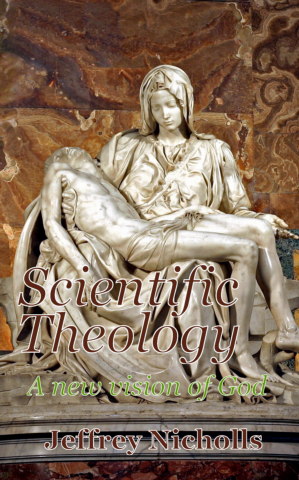
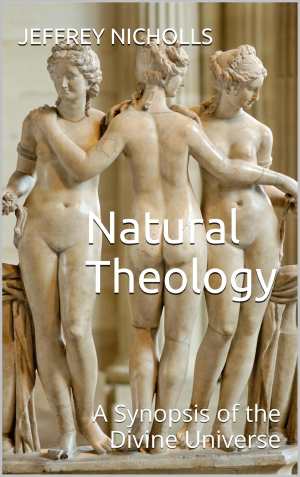
I am trying to produce a greatly simplified explanation of the creation of the world by exploiting the theological logic which has developeed over the last 5000 years, beginning from a state of absolute simplicity and exploiting the idea that the world created itself, implying that the process has been evolutionary, exploiting the enormous power of evolution to explain the extraordinary complexity of living organisms. This approach sounds rather contradictory, but it is part of my “Einstein” approach, ie learning from the mistakes that Einstein made. The idea is that to think theologically, reject faith and live by what we can see and learn from the world, ie scientific theology building on the simplicity of linear quantum theory [ie a promising approach]. Really there is nothing special about my method but that I like it.
[edited notes from 23 November 2025 to 22 February 2026 ready for upload; projects L4L and On Creation (Frontiers in Physics)
Monday 2 March 2026
Note about Cognitive Cosmogenesis and Quantocracy sent to Laura K Field. Laura K. Field: Furious Minds: The Making of the Maga New Right (2026)
[page 343]
Tuesday 3 March 2026
Have nearly published my diaries until the end of 2025. So only 8 weeks behind and wondering where the time has gone and feeling my age but enlightened by my feelings since my book published. [. . .] The diary is turning more into a catalogue of event rather than thoughts, but the ideas are consolidating and the critique of QFT necessary to make theology work feels secure.
The long shot at the moment is to connect the ‘fiscal prudence’ of the universe issuing dynamic energy currency (cash) to the creation of physical particles only in strict equality to booking debt (potential energy) (to maintain the balance of the world at zero) to the concept of justice at all scales by invoking the concept of symmetry with respect to complexity in quantum mechanics. The link proposed here is that gravitation per se (as we say) is completely simple and ignorant and the logical/intellectual side of business in the world is the work of quantum intelligence.
In my essay Quantocracy: The universal quantum mechanical foundations of democracy and freedom I have already postulated that quantum intelligence is the source of independence and agency at all scales fuelled by the random creation of Hilbert space in the singularity.
[page 344]
I am relying on the fact that fiction (the creation of hypotheses) is free, analogous to the random creastion of orthogonsl basis vectors in the singularity. These vectors can only be discrete if they are orthogonal because at this level of complexity the only guarantee of independence is orhogonality, (the “angel: theorem). Aquinas, Summa I, 50, 4: Is every angel a different species?
Feeling cool and happy now after the usual early morning moment of panic. Rent safely paid so I am safely housed for another two weeks. Dreaming, but the universe, as Darwin explained, also develops itself by dreams in the form of creating new fictional genetic forms which may in fact have a selective adantage and become embedded in the system.
Eventually, if my ideas are to have any impact, I must have the power to get myself in the news lie Greta Thunberg. Would prefer, however, to sit at home and polish my message by writing and article for Frontiers in Physics. Greta Thunberg - Wikipedia
Note to Abstract to Frontiers: The idea behind the articles was formed in the 1960s when I was a Catholic monk contemplating the theological ides of symmetry developed by the ancients whose definition of God is ‘pure action’ an entity of such simplicity that it is a necessary being, ie its essence is to exist and nothing more.
The root idea is that we should treat one another with the same care snd respect that elementary particles guided by quantum
[page 345]
mechanics treat one another, embracing freedom, agency and justice.
We develop this picture using the theological tradition generated by Plato, Aristotle. The Islamic theologians and Aquinas and contrast it with the military/imperial tradition that has dominated human practical politics since physical development of weapons and defences has enabled small populations violent people do dominate peaceful multitudes whose level of violence was local and domestic rather than territorial, imperial and controlling. This contrasts with democracy where the population controls the rulers rather than vice versa. Platonism - Wikipedia, Aristotelianism - Wikipedia, Islamic Golden Age - Wikipedia, Thomas Aquinas
This will be (?) the general tenor of Lust-4-Life.ccom.
The gods of theocracy are outside controlling powers from which human agencies like the Papacy claim (often infallible) guidance. Theocracy - Wikipedia, Papal Infallibility - Wikipedia
Wednesday 4 March 2026
Pages for correction and upload finished to notes26m02d22.
Thursday 5 March 2026
Dentist 12.45
Friday 6 March 2026
Ibrahim Al-Marashi. There can be little doubt that the long running war between Iran and the US has a deep religious foundation stretching back to at least the crusades. Religions tend to be imperial, theocratic and autocratic, seeking to control their populations in their respective nations with varying degrees of propagandas and violence while at the same time using this control as a weapon to mobilize their population in their hegemonic struggles against rival religions. the religious wars of Europe were an outstanding example of this and the ongoing wars between the Christian UK and US and the various faces of Islam has continued wth little loss of intensity ever since the crusades and the Christian wars against “heretics”. Ibrahim Al-Marashi (2026_03_03): Iran and the US have been at war for decades – and there’s no end in sight, Lydia Polgreen (2026_03_06): Trump’s Fantasy Is Crashing Down, Geoffrey Robinson (2026_03_03): Iran’s regime is vile, but what Trump and Netanyahu have done is a war crime
We think that making plans, writing them down and studying them before execution is a measure of our intelligence but the actual nature of evolution tells us that the universe has been doing this all along as soon as fixed point theory started to operate in the initial singularity.
I would like to be able to write all this stuff as music. Eagles, c 1977. From a von Neumann point of view it is music.
Eagles (1977): Eagles (1977)
The further we take evolution forward into science and backwards into creation the better we see a continuousd trajectory of creation which serves as the theme of cognitive cosmogenesis. The emotional output of quantum mechanics arises from the fact that there is a linear pipeline between the input bases and the output eigenvectors and eigenvalues. This ides wipes out the “measurement problem”. Jeffrey Nicholls (2025): Cognitive Cosmogenesis: A systematic unification of physics and theology
[page 347]
The interesting bit is where the linearity goes into quadratic Minkowski space and this transition, like electrodynamics, tells us how to connect the quadratic to the linear by (As Behiel shows) by local phase symmetry which links fermions to bosons giving us the laws of electrons and photons. We work back to this from Minkowski space to quantum mechanics but the generative path goes from quantum to Minkowski via fermions and bosons. We have to say more about how the underlying symmetry oÏf quantum mechanics gives us Minkowski space – work this out in the 10 steps and Minkowski and then assemble it into Frontiers paper going from abstract symmetry principle where there is no spacetime [in quantum mechanics] to Minkowski space via fermions and bosons. Keep saying this until it makes sense. Now bed. Richard Behiel: Electromagnetism as a Gauge Theory
The random bases in the singularity feed into the inertial space and the inertial space feeds back into gravitation which locks the structure in [a random bootstrapping ratchet!]
Saturday 7 March 2026
Abe Books has got 40+ sellers of my book 3 months after publication. Abe Books: Cognitive by Nicholls (48 results)
I have faith in my fantasy, cognitive cosmogenesis, and the task now is to tie it more securely to gravitation and quantum mechanics in an articles for a physics journal which I must attempt to complete this month (since the February target has passed).
[page 248]
The way forward here is still not clear but the analogy with the evolution of life is very powerful since it shows how a process of variation and selection and superposition and memory can generate enormously complex system like my rabbit [which survives by feeding on grass whereas quantum forms survive by feeding on gravitation]. The idea then is to generate an hypothesis beginning with the Aquinas&nsash;Einstein and leading to Minkowski and the periodic table and then we can let evolution go on from there.
The key is to get the cognitive basis in place by casting the quantum of action as a linear operatator, starting at not and working up to countably infinite matrices, The memory here is in effect eternity which has the effect of establishing conservation of energy in a context of increasing entropy, and we see this beginning with the set of observed fundamental particles, which have the variety and connectivity to create everything else.
The key to quantum mechanics is the quantum of action that can be represented symbolically as a hermitian operator whose action is precisely one quantum. The rate of quantum processing is represented by energy, the rate of processing in actions per unit of time. The quantum is closely related to a ribosome, a processor which converts genetic vector into a protein whose sequence of molecules mimics the sequence in the gene and whose structure is determined by the relaxation of the [connections between] the molecules of amino acid so connected. The quantum, represented by a matrix, plays a role in physics similar to that played by the ribosome in life, mapping input from Hilbert space onto the same Hilbert space in a different form [preserving entropy, ie count of dimensions. Sergei Treil (2026_01_21)
I would like to prove my position every inch of the way but I am still in the hypothetical realm but there is a vast collection of dats to raw from and my principal method of proof is the establishment of possibility, that my story fits all the existing data. QCD
[page 349]
is completely trivial in complexity compared to the complexity of an element of the Archaea and quantum mechanics per se is perfectly capable of describing an Archaeon. Archaea - Wikipedia
Quantum mechanics is strictly linear. There are no exponential interest rates in it. All the exponents are complex, reduced to unitarity by sines and cosines.
The basic and most durable imperial, theocratic and autocratic force in the world is the Roman Catholic Church which is as deeply fascist organization built on pure bullshit [aka fantasy or hypothesis]. Lust‐4–Life will begin with a model of the physical world and will go in to discredit all the fake structures that have been built on false data, the supremacy of white male dreams of total control.
|
Copyright:
You msay copy this material freely provided only that you quote fairly and provide a link (or reference) to your source.
Further readingBooks
Fernandez (2025), Clinton, Turbulence: Australian Foreign Policy in the Trump Era, Melbourne UP 2026 ' Clinton Fernandes is Professor of International and Political Studies at the University of New South Wales. He has published on the relationship between science, diplomacy and international law, intelligence operations in foreign policy, the political and regulatory implications of new technology and Australia's external relations more generally. His research in the Future Operations Research Group at UNSW analyses the operational environment, and the threats, risks and opportunities that military forces will face, in the 2030-50 timeframe.
Amazon
back |
Field (2026), Laura K, Furious Minds: The Making of the Maga New Right, Princeton UP, 2026, ' The story of the radical conservative intellectual movement shaping Donald Trump's agenda and how it threatens American freedoms, values, and democracy
Donald Trump is not a big thinker, but his 2016 presidential victory presented a grand opportunity for people who are, and it set off a radicalisation and reconfiguration of the American conservative intellectual world. In Furious Minds, Laura Field, who spent close to a decade in conservative academic circles, chronicles the rise of the New Right the network of academics, public intellectuals, and influencers who provide ideological fuel to Trumpism. This movement includes figures such as Patrick Deneen, Christopher Rufo, Peter Thiel, and JD Vance. Their agenda is built to last, and it has dire long-term implications for liberal democracy.
The New Right has precedents in American history, but it is distinct for its youthfulness, misogyny, and extraordinary successes most notably the elevation of Vance to the vice presidency. The movement which draws together associates of the right-wing Claremont Institute, National Conservatives, Postliberals, and the Hard Right advocates nationalist economics, tight borders, isolationism, and reactionary social values. It helped to strategise January 6th and created Project 2025. But above all, the New Right is engaged in a vast culture war against modern liberal pluralism. It is determined to harness state power and use it in new, illiberal ways, from college campuses to the international scene all driven by the fantasy of restoring a pure America.
Incisive and urgent, Furious Minds tells the story of the thinkers of the New Right and their powerful assault on American freedoms, values, and ideals.
Amazon
back |
Nicholls (2025), Jeffrey, Cognitive Cosmogenesis: A systematic unification of physics and theology, Austin Macauley Publishers 12025 ' This book is a personal narrative of those events and a defense of the belief that the universe itself is divine. The central argument is that by embracing this reality and abandoning notions of supernatural deities, humanity can resolve its problems. The universe, it is argued, is self-creating, and a proper understanding of physics leads to a plausible scientific theology. The natural intelligence inherent in the universe, from cellular organization to ecosystems, far surpasses any artificial intelligence. Comprehending this natural order, the author suggests, would make achieving world peace relatively straightforward.
The book contends that modern theologians should recognize the physical world, rather than ancient texts, as the foundation for credible theology. It also addresses the historical entanglement of religion and politics, asserting that the model of creation presented herein fundamentally rejects the imperialistic ambitions that have fueled genocidal holy wars.'
Amazon
back |
Links
Abe Books, Niholls, Cognitive Cosmogenesis, ' Cognitive Cosmogenesis: A Systematic Integration of Physics and Theology
Nicholls, Jeffrey
Language: English
Published by Austin Macauley Publishers, 2025
ISBN 10: 1035888025 / ISBN 13: 9781035888023
Seller: Kennys Bookshop and Art Galleries Ltd., Galway, GY, Ireland back |
Alex Lo (2026_03_01), My Take | China always ends up winning when the United States goes to war (with others), 'm Blessed are the peacemakers. Blessed also are those who stay out of trouble while the vainglorious and bloodthirsty go to war thinking they can dominate and win. Aggression almost never works out as intended, even with temporary success. More often than not, the warmongers don’t even achieve that much.
So good luck with imperialist-wannabes Donald Trump and Benjamin Netanyahu, and their latest war of aggression.
China will always stay out of other people’s fights. Never get entangled, never get involved. That’s why time and again, it says it doesn’t seek global dominance, despite Western propagandists’ claims to the contrary. That has been the secret sauce of China’s success. " back |
Anil Ananthaswamy (2017_07_26), The geometry that could reveal the true nature of space-time, back |
Aquinas, Summa I, 50, 4, Is every angel a different species?, ' . . . such things as agree in species but differ in number, agree in form, but are distinguished materially. If, therefore, the angels be not composed of matter and form, as was said above (Article 2), it follows that it is impossible for two angels to be of one species; just as it would be impossible for there to be several whitenesses apart, or several humanities, since whitenesses are not several, except in so far as they are in several substances.' back |
Archaea - Wikipedia, Archaea - Wikipedia, the free encyclopedia, 'The Archaea . . . constitute a domain and kingdom of single-celled microorganisms. These microbes . . . are prokaryotes, meaning they have no cell nucleus or any other membrane-bound organelles in their cells.
Archaea were initially classified as bacteria, receiving the name archaebacteria (in the Archaebacteria kingdom), but this classification is outdated. Archaeal cells have unique properties separating them from the other two domains of life, Bacteria and Eukaryota.' back |
Aristotelianism - Wikipedia, Aristotelianism - Wikipedia, the free encyclopedia, Aristotelianism . . . is a tradition of philosophy that takes its defining inspiration from the work of Aristotle. . . . Aristotelianism became a major part of early Islamic philosophy. Although some knowledge of Aristotle's logical works was known to western Europe, it wasn't until the Latin translations of the 12th century that the works of Aristotle and his Arabic commentators became widely available. Scholars such as Albertus Magnus and Thomas Aquinas interpreted and systematized Aristotle's works in accordance with Christian theology.' back |
Carol Rosenberg (2026_03_060, Trump’s U.S.S. Cole Remarks Raise Questions in Guantánamo Case, ' In laying out his justifications for the U.S. war against Iran, President Trump mentioned a mostly forgotten Al Qaeda attack that killed 17 American sailors and wounded dozens of others 25 years ago.
On Oct. 12, 2000, suicide bombers blew up the sailors’ ship, the U.S.S. Cole, while it was on a refueling stop in Yemen. Al Qaeda claimed responsibility in what would be seen as a harbinger of the Sept. 11 attacks.In laying out his justifications for the U.S. war against Iran, President Trump mentioned a mostly forgotten Al Qaeda attack that killed 17 American sailors and wounded dozens of others 25 years ago.
On Oct. 12, 2000, suicide bombers blew up the sailors’ ship, the U.S.S. Cole, while it was on a refueling stop in Yemen. Al Qaeda claimed responsibility in what would be seen as a harbinger of the Sept. 11 attacks. In laying out his justifications for the U.S. war against Iran, President Trump mentioned a mostly forgotten Al Qaeda attack that killed 17 American sailors and wounded dozens of others 25 years ago.
On Oct. 12, 2000, suicide bombers blew up the sailors’ ship, the U.S.S. Cole, while it was on a refueling stop in Yemen. Al Qaeda claimed responsibility in what would be seen as a harbinger of the Sept. 11 attacks.
Mr. Trump suggested a link between the Cole and Iran in a video the White House released hours into the war.
“In 2000, they knew and were probably involved with the attack on the U.S.S. Cole,” Mr. Trump said. “Many died.”
By conjuring up an Iran connection, Mr. Trump demonstrated how entangled the United States still is in the legacy of its last big wars as it embarks on the next. It also drew attention to a years-old lawsuit against Iran that sought a measure of justice for the families of the fallen and their surviving shipmates.
Abd al-Rahim al-Nashiri, a Saudi man, is accused of plotting the Cole bombing and other Qaeda attacks on ships in the region for Osama bin Laden. Jury selection for his military commission trial is scheduled to start on June 1, nearly 25 years after he was captured in the United Arab Emirates, tortured and held for years by the C.I.A. He has been a prisoner of the U.S. military at the naval station at Guantánamo Bay, Cuba, since 2006.
His lawyers, who are paid by the Pentagon to defend him, formally asked prosecutors this week to disclose any U.S. intelligence supporting the president’s assertion.'
back |
Clinton Fernandez (2026_03_03), Trump’s attacks are not about Iran. He’s after a much bigger fish, ' Behind the turbulence that characterises US President Donald Trump’s actions in Iran lies a shrewd geopolitical strategy. In the short term, he wants to demonstrate leverage over China when he meets President Xi Jinping at a pivotal summit next month. In the long term, he wants a politically submissive Middle East.
China, the world’s largest refiner of oil, purchases about 14 per cent of its seaborne crude from Iran. The true figure is probably higher, disguised as shipments from Oman, the UAE and Malaysia to get around US sanctions. Independent low-margin Chinese refiners in Shandong province, known as teapots, also import high-sulfur fuel oil from Iran. Taken as a whole, China’s enormous plastics sector relies on Iran for almost a quarter of its liquefied petroleum gas. Control over what Iran can export and to whom allows the US to retaliate if China restricts rare earth mineral supplies to the United States. [. . .]
An Iran with a government more amenable to US influence can be expected to do something similar. This is why Trump says that the war against Iran could take weeks. He isn’t merely interested in ending its uranium enrichment. After all, Iran obtained its original nuclear reactor as well the highly enriched uranium fuel to run it from the US, under former president Dwight D. Eisenhower’s “Atoms for Peace” program in 1957, when the two countries were friendly.
In the long term, a politically submissive Middle East would likely see a network of states with authoritarian regimes that comply with US objectives. These include rolling back Iran’s membership of the Shanghai Co-operation Organisation, undermining China’s Belt and Road Initiative, and weakening the China-Pakistan Economic Corridor. If the US can’t change the Islamic Republic itself, then keeping it weak, divided and preoccupied with its internal affairs is good enough.
Control, not access, is what Trump is after. It is the same strategy Britain had 100 years ago, when Walter Hume Long, the first lord of the admiralty, said that “if we secure the supplies of oil now available in the world, we can do what we like”.' back |
Eagles (1977), Take It To The Limit (Live 1977) (Official Video) [4K]f, x back |
Geoffrey Robinson (2026_03_03), Iran’s regime is vile, but what Trump and Netanyahu have done is a war crime, ' In a lawless world, it may seem idle to judge the conduct of leaders like Donald Trump and Benjamin Netanyahu by international rules to which they are indifferent. But those who use their power to invade other countries commit what the judgment at Nuremberg described as the supreme war crime — that of aggression — because they bear responsibility for all the death and dismemberment that war inevitably entails, for civilians as well as soldiers. [. . .]
Most of the murders and tortures would be available for prosecution by a new government of Iran. And that, of course, is the problem Trump overlooked in his naive demand that the Iranian people “take back their country”. They do not have the power or the firepower to do this — all guns are in the hands of the Islamic Revolutionary Guard, who are unlikely to relinquish them.
There is no organised opposition. Reza Pahlavi, the exiled son of Iran’s last shah, is an absurd candidate to lead them, as his father was an infamous torturer through SAVAK, his secret police force. Maryam Rajavi, who heads the National Council of Resistance, is a favourite of the Iranian diaspora, but her local support is untested. So what happens next, after four weeks in which Trump promises to blast and bomb this vile theocracy?
The UN is responsible for allowing Iran to get away with the mass murder of its own people, and this would be a good time for it to act under Chapter VII of its own charter and set up an international court to investigate and indict government officials who carried out the prison massacres of 1988, as well as those who ordered the killing of peaceful protesters in the past two months. There can be no peace without justice, whatever happens to any future government.' back |
Gregory F. Treverton (2026_03_04), CIA agents successfully executed a plan for regime change in Iran in 1953 – but Trump hasn’t revealed any signs of a plan, ' I am a scholar and former practitioner of intelligence and national security policy in the White House. I believe there are lessons in effecting political change in Iran that can be taken, ironically, from the very U.S.- and British-led clandestine campaign in the mid-20th century that set Iran on the road to the intense anti-Western and anti-American sentiment that has characterized its government policy for decades.
President Trump has said he wants regime change in Iran but has articulated no strategy for achieving that end.
Read news powered by real people.
Strategy is the connection between means and ends. For waging a war, it means asking whether the military means available match the desired military outcome. In trying to effect political change, it means asking whether the instruments employed will produce the desired change.
As journalist Fareed Zakaria put it, “‘Bomb and hope’ is not a strategy.” [. . .]
By early 1953 the U.S. government, under President Dwight D. Eisenhower, authorized the CIA to prepare a covert plan to remove Mossadegh and restore effective power to the shah, who at the time held a more ceremonial role. British intelligence had been pushing a similar agenda, and the two services collaborated on both the strategy and its implementation.
The operational details, especially those declassified in recent decades, paint a striking picture of a carefully planned clandestine political intervention that was successful, rather than a simple military invasion. [. . .]
Crises tend to put pressure on governments to open communications channels, and the take from any successful eavesdropping might be passed to opposition groups to help them organize and avoid capture.
If Israel can smuggle explosive drones into Iran, it should be able to make the satellite internet provider Starlink and its kin available to enable the opposition to better – and more safely – organize.
It is late in the day to emulate the Mossadegh coup with information operations, and it is probably more difficult in an era of ubiquitous social media, not newspapers. But it’s not too late to try.
I believe those brave opposition elements in Iran, who have been killed by their government and bombed by the United States and Israel, deserve no less.'
back |
Greta Thunberg - Wikipedia, Greta Thunberg - Wikipedia, the free encyclopedia, ' Greta Tintin Eleonora Ernman Thunberg (Swedish: [ˈɡrêːta ˈtʉ̂ːnbærj] ⓘ; born 3 January 2003) is a Swedish activist best known for pressuring governments to address climate change and social issues. She gained global attention in 2018, at age 15, after starting a solo school strike outside the Swedish parliament, which inspired the worldwide Fridays for Future movement.
Following the growth of the school strike movement, Thunberg became an internationally known figure through speeches, protests, and participation in climate demonstrations in Europe and elsewhere. She has addressed political leaders and taken part in major climate-related events, and her activism has been widely covered by international media, drawing both support and criticism. She has also broadened her focus to include human rights and global justice, voicing support for Ukraine, Palestine, and Armenia. In 2025, Thunberg twice joined a humanitarian flotilla bound for the Gaza Strip, which drew international attention and political controversy.' back |
Ibrahim Al-Marashi (2026_03_03), Iran and the US have been at war for decades – and there’s no end in sight, ' It may seem that the US and the Middle East are currently embarking on yet another forever war. But the truth is that this is just the latest instalment of an undeclared military conflict between the two nations that has been ongoing since the 1980s.
For Americans, the war began in 1979, when Iranian students seized the US embassy in Tehran and held 52 diplomats hostage for 444 days. For Iranians, it began with US support for the Shah and its subsequent backing of Iraq throughout the 1980-1988 Iran-Iraq war.
The conflict has claimed many civilian lives. On July 3 1988, the US warship Vincennes downed Iran Air Flight 655, a civilian flight bound for Dubai. The USS Vincennes misidentified the Airbus as a military aircraft and shot it down, killing all 290 people on board. More recently, on 28 February 2026, a US-Israeli missile hit a girls’ school in southern Iran, killing over 150 civilians, most of them children. [. . .]
For Iranians, the circumstances that led to the downing of its airliner in 1988 resonate with the present: the direct military action of June 2025, Trump ordering the assassination of Soleimani in January 2020, and economic warfare through sanctions.
The 2015 Iran deal was the first attempt to end the conflict between the two nations that began in the 1980s. The deal was Barack Obama’s major diplomatic triumph, and Trump has been fixated on undoing the policies of his predecessor.
However, the recent escalation between the US and Iran was also a legacy of the Biden administration, which had the chance to de-escalate the long war between Iran and the US after winning the November 2020 elections.
US deployment to the Gulf in the 1980s was disproportionate to the threat to shipping, and was seen by many as a flimsy pretext to seek out war with Iran. A similarly dubious justification – that Iran was just weeks away from a nuclear weapon – was made by Israel to justify its 12-Day War in June 2025.
As of February 2026, the US has initiated the latest round in this conflict. To date, both states managed to escalate without crossing into total war, but that equilibrium may now be breaking down.' back |
Islamic Golden Age - Wikipedia, Islamic Golden Age - Wikipedia, the free encyclopedia, 'The Islamic Golden Age or the Islamic Renaissance,[is traditionally dated from the 9th to 13th centuries A.D., for 400 years but has been extended to the 15th century by recent scholarship. During this period, artists, engineers, scholars, poets, philosophers, geographers and traders in the Islamic world contributed to the arts, agriculture, economics, industry, law, literature, navigation, philosophy, sciences, sociology, and technology, both by preserving earlier traditions and by adding inventions and innovations of their own.' back |
Jennifer Parker (2026_03_06), The US sank an Iranian warship and didn’t rescue the survivors. Is this legal in war?, ' While debate continues over the legal justification for the United States entering the conflict with Iran, the conduct of hostilities at sea is nonetheless governed by the law of naval warfare.
Under that framework, IRIS Dena therefore constitutes a lawful military target, and efforts to facilitate the rescue of survivors are consistent with those obligations.' back |
Jesse Norman (2025_03-06), This masterwork is turning 250. It’s needed now more than ever., ' On March 9, 1776, four months before the American colonies broke with Britain over the issue of taxation, a little-known Scottish thinker published a long, dense book with an unpromising title: “An Inquiry into the Nature and Causes of the Wealth of Nations.”
Two hundred and fifty years later, Adam Smith is, by any objective measure, easily the most widely cited and widely quoted economist who ever lived. Astonishingly, his work still frames the central questions we face, not just about free markets, trade and capitalism, but about the nature of human society, and even what it is to be human at all.
Smith was born in 1723 in Kirkcaldy, Scotland, educated at the universities of Glasgow and Oxford, and initially made his name not as an economist but as a moral philosopher. His first published book, “The Theory of Moral Sentiments,” offered a radical theory of how we form moral judgments: radical, because it derived the creation of moral values not from scripture or divine grace, but from human sympathy and mutual regard.
“The Wealth of Nations,” as his second major work came to be known, was an extension of that project. The book is not, as sometimes believed, a hymn to greed, a paean to market fundamentalism and red-in-tooth-and-claw capitalism. It was an attempt to understand how a commercial society could generate prosperity without collapsing into corruption. [. . .]
Begin with trade. In his own time, Smith’s great target was mercantilism, or what he called “the mercantile system”: the idea that wealth consists of hoarded bullion, and that trade is a zero-sum contest. Governments granted monopolies, imposed tariffs and manipulated commerce in the purported pursuit of national strength. Producers were widely protected, consumers often ignored altogether.
Against this, Smith argued that wealth lies in a nation’s productive capacity, not in the accumulation of treasure. The free exchange of goods and services through trade enlarges the market, deepens specialization and raises living standards through competition. It is cooperative, not combative. Imports are not humiliations; they are benefits to consumers and inputs to producers.
Two and a half centuries on, in the United States — the nation founded on the experiment of a large, competitive commercial republic — the language of mercantilism is back. Trade deficits are denounced as evidence of weakness. Tariffs are presented as patriotic necessity. Supply chains are repatriated as though geography were a substitute for competitiveness. [. . .]
The anniversary of Smith’s great work is a reminder that capitalism is not self-executing. It requires constant scrutiny and renewal. To adapt Benjamin Franklin’s famous line about the new American republic, “You have a capitalist system, if you can keep it.”>br>
The question is not what Smith would say now. It is whether we are prepared to take seriously what he has already taught us about our world.' back |
Lydia Polgreen (2026_03_06), Trump’s Fantasy Is Crashing Down, ' In Donald Trump’s fantasy world, America is invincible and impregnable.
Its military is so advanced and skillful that it can pluck a sitting head of state from a hostile country and deposit him in a New York City jail cell without losing a single soldier. It can slap punitive tariffs on any nation it likes, abandon longstanding alliances on a whim, bomb any country at any time and freely blow up boats it may suspect of carrying drugs. America’s awesome power means it is unfettered by any rules, untroubled by any consequences. As an unfathomably rich and sprawling nation, blessed by geography and protected from its enemies by two vast oceans, why shouldn’t it do what it will?
Over the past six days, as Trump plunged the United States into a war with Iran, that fantasy of omnipotence has come crashing into reality. Undertaken for unexplained and perhaps unexplainable reasons, the war is being waged in a central node of the global economy against a disciplined, well-armed opponent with nothing to lose. America and Israel killed Ayatollah Ali Khamenei and a dozen Iranian leaders on the first day of fighting, but Trump has clearly given little thought to what comes next. Recklessly, he has ignited a widening conflagration with no obvious end in sight. The death toll has already surpassed 1,000 people.
And yet Trump presses on, declaring at one point that the war could go on “forever.” In a manic briefing on Wednesday, Defense Secretary Pete Hegseth promised “death and destruction from the sky all day long” over Tehran, a densely populated city of about 10 million people. “This was never meant to be a fair fight, and it is not a fair fight. We are punching them while they’re down, which is exactly how it should be.”
Watching Hegseth rant about limitless killing, I remembered the words of the anticolonial poet and leader Aimé Césaire. “The hour of the barbarian is at hand,” he wrote in his “Discourse on Colonialism” in 1950. “The modern barbarian. The American hour. Violence, excess, waste, mercantilism, bluff, conformism, stupidity, vulgarity, disorder'." back |
Metmep Ozalp (2026_03_05), Who is Mojtaba Khamenei, Iran’s presumed next supreme leader? And would he bring change – or more brutal suppression?, ' The death of Iran’s supreme leader, Ali Khamenei, during the holy month of Ramadan marks one of the most consequential turning points in the history of the Islamic Republic of Iran.
His successor, widely expected to be his son Mojtaba Khamenei, represents both continuity and contradiction in the revolutionary system established after the Iranian Revolution in 1979.
At stake is not only who leads Iran, but what the Islamic Republic has become, nearly half a century after the revolution that promised an end to dynastic rule. Mojtaba Khamenei’s profile suggests a more security-centred style of leadership with three possible ways forward. [. . .]
First, domestic control may harden. Given Mojtaba’s reported ties to the security establishment, unrest is more likely to be met with swift repression rather than political accommodation.
Second, the IRGC could expand its influence in regional affairs, given how closely aligned Mojtaba is with the guards.
Third, any negotiations with the West would likely be tactical rather than transformative. They would be framed as a strategic necessity rather than an ideological shift.
And given the fact his father was killed in US-Israeli airstrikes, this will only reinforce a more hardline posture toward both countries.
In short, Iran under Mojtaba Khamenei would likely remain confrontational in rhetoric, but pragmatic when regime survival is at stake.' back |
Papal Infallibility - Wikipedia, Papal Infallibility - Wikipedia, the free encyclopedia, ' Papal infallibility is a dogma of the Catholic Church that states that, in virtue of the promise of Jesus to Peter, the Pope is preserved from the possibility of error "When, in the exercise of his office as shepherd and teacher of all Christians, in virtue of his supreme apostolic authority, he defines a doctrine concerning faith or morals to be held by the whole Church.' back |
Platonism - Wikipedia, Platonism - Wikipedia, the free encyclopedia, ' In the 3rd century AD, Plotinus added additional mystical elements, establishing Neoplatonism, in which the summit of existence was the One or the Good, the source of all things; in virtue and meditation the soul had the power to elevate itself to attain union with the One. Many Platonic notions were adopted by the Christian church which understood Plato's Forms as God's thoughts (a position also known as divine conceptualism), while Neoplatonism became a major influence on Christian mysticism in the West through Saint Augustine, Doctor of the Catholic Church, who was heavily influenced by Plotinus' Enneads, and in turn were foundations for the whole of Western Christian thought. Many ideas of Plato were incorporated by the Roman Catholic Church.' back |
Richard Behiel, Electromagnetism as a Gauge Theory, ' "Why is electromagnetism a thing?" That's the question. In this video, we explore the answer given by gauge theory. In a nutshell, electromagnetism arises from local phase symmetry. But what does that mean, and how exactly does that work? That's what this video is all about!
This video is quite long and technical. Think of it as a video textbook, so you can skip around to different parts if you’d like. But I wanted to err on the side of rigor and thoroughness, to show comprehensively how local U(1) symmetry blossoms into electromagnetism. So the ideas are all there for you, but you don’t have to watch this in one sitting! ' back |
Sergei Treil (2026_01_21), Linear Algebra Done Wrong, 'Besides being a first course in linear algebra it is also supposed to be
a first course introducing a student to rigorous proof, formal definitions—in short, to the style of modern theoretical (abstract) mathematics. The target audience explains the very specific blend of elementary ideas and concrete examples, which are usually presented in introductory linear algebra texts with more abstract definitions and constructions typical for advanced books.
Another specific of the book is that it is not written by or for an alge-
braist. So, I tried to emphasize the topics that are important for analysis,
geometry, probability, etc., and did not include some traditional topics. For example, I am only considering vector spaces over the fields of real or complex numbers. Linear spaces over other fields are not considered at all, since I feel time required to introduce and explain abstract fields would be better spent on some more classical topics, which will be required in other dis- ciplines. And later, when the students study general fields in an abstract algebra course they will understand that many of the constructions studied in this book will also work for general fields.
Also, I treat only finite-dimensional spaces in this book and a basis
always means a finite basis. The reason is that it is impossible to say something non-trivial about infinite-dimensional spaces without introducing convergence, norms, completeness etc., i.e. the basics of functional analysis. And this is definitely a subject for a separate course (text). So, I do not consider infinite Hamel bases here: they are not needed in most applications to analysis and geometry, and I feel they belong in an abstract algebra course.' back |
Theocracy - Wikipedia, Theocracy - Wikipedia, the free encyclopedia, ' Theocracy is a form of government in which one or more deities are recognized as supreme ruling authorities, giving divine guidance to human intermediaries who manage the government's daily affairs.. . .
The term was initially coined by Flavius Josephus in the first century AD to describe the characteristic government of the Jews. . . . according to Josephus, the government of the Jews was unique. Josephus offered the term theocracy to describe this polity in which a god was sovereign and the god's word was law. . .
Iran has been described as a "theocratic republic" by the CIA World Factbook, and its constitution has been described as a "hybrid" of "theocratic and democratic elements" by Francis Fukuyama. Like other Islamic states, it maintains religious laws and has religious courts to interpret all aspects of law. According to Iran's constitution, "all civil, penal, financial, economic, administrative, cultural, military, political, and other laws and regulations must be based on Islamic criteria". ' back |
Thomas Aquinas, Summa Theologiae, Thomas Aquinas: The medieval theological classic online : 'Because the doctor of Catholic truth ought not only to teach the proficient, but also to instruct beginners (according to the Apostle: As unto little ones in Christ, I gave you milk to drink, not meat -- 1 Cor. 3:1-2), we purpose in this book to treat of whatever belongs to the Christian religion, in such a way as may tend to the instruction of beginners. We have considered that students in this doctrine have not seldom been hampered by what they have found written by other authors, partly on account of the multiplication of useless questions, articles, and arguments, partly also because those things that are needful for them to know are not taught according to the order of the subject matter, but according as the plan of the book might require, or the occasion of the argument offer, partly, too, because frequent repetition brought weariness and confusion to the minds of readers.'
back |
|